A trailer that looks serviceable in the yard can still create a costly problem at the scale, on the shoulder, or when it is time to transfer ownership. So, what is a trailer safety? In Ontario, the term commonly refers to an inspection that confirms a trailer meets applicable roadworthiness standards and, when it passes, supports the issuance of a Safety Standards Certificate. For commercial operators, it can also be used loosely to describe required annual trailer inspections.
The exact requirement depends on the trailer’s weight, use, registration situation, and whether it is being operated as part of a commercial vehicle. What does not change is the practical goal: make sure the trailer can brake, light up, track properly, and stay connected to the truck under working conditions.
What Is a Trailer Safety Inspection?
A trailer safety inspection is a detailed review of road-critical components by a licensed inspection facility. It is not a quick walk-around and it is not the same as a basic service appointment. The inspector assesses whether the trailer meets the standards that apply on the day it is inspected.
For many owners, a Safety Standards Certificate becomes relevant when a used trailer is being sold, transferred, or registered. A certificate is generally tied to a specific point in time, not a promise that the trailer will remain problem-free for months afterward. Components wear, loads shift, wiring corrodes, and a trailer that passed in the spring may need repairs by fall.
Commercial fleets also need to separate a safety certificate from an annual inspection requirement. Ontario’s commercial vehicle inspection rules can apply to trailers and semitrailers used in commercial service. These inspections are documented differently and may involve an annual inspection sticker or report. Requirements vary by vehicle class and operation, so fleet managers should confirm the current rule that applies to their equipment before dispatching it.
What a Trailer Safety Usually Checks
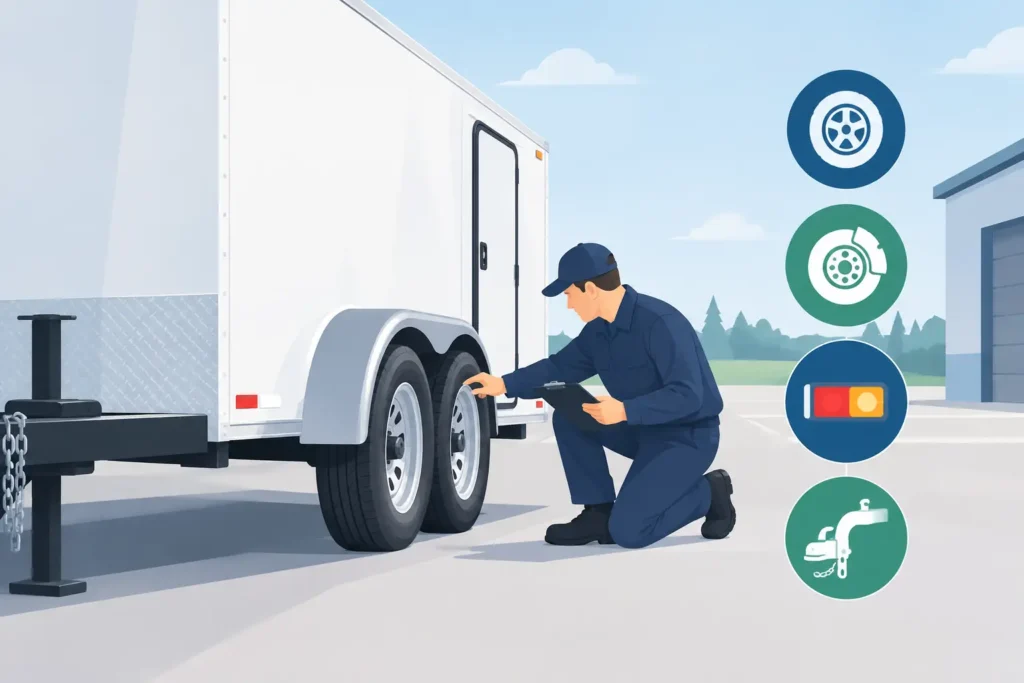
The inspection focuses on the systems that keep a trailer controllable, visible, and structurally sound on public roads. A good inspection starts with the trailer identification and overall condition, then works through the equipment that can cause a roadside defect or failure.
Brakes and air system
On heavy trailers, brake condition is often where hidden downtime starts. The inspection may cover brake drums or rotors, linings or pads, chambers, slack adjusters, hoses, fittings, reservoirs, and air leaks. The inspector also checks that brake response and adjustment are within acceptable limits.
A small air leak may seem manageable in the yard, but it can turn into a serious issue when a loaded trailer is sitting at a job site or waiting to leave a pit. Worn brake components also increase stopping distance and can create uneven braking that puts extra stress on tires, suspension, and the tractor.
Tires, wheels, and hubs
Trailer tires take a beating from curb contact, overloaded runs, low pressure, poor alignment, and long periods sitting unused. The inspection checks tread condition, tire damage, exposed cords, wheel fasteners, rims, and bearing or hub concerns.
A tire that is legal today may still be a poor choice for a busy hauling schedule if it is near the end of its useful life. This is where operators need a practical decision, not just a pass-or-fail answer. Replacing a marginal tire before a long run may cost less than a roadside call, missed delivery, and damaged cargo.
Lights, wiring, and reflectors
Lighting defects are common because trailer wiring lives in a rough environment. Moisture, vibration, road salt, pinched harnesses, and damaged connectors can cause intermittent failures that only show up after dark or when the trailer is turning.
Inspectors check brake lights, turn signals, running lights, marker lamps, reflectors, and electrical connections as applicable. A light that flashes occasionally is not a minor inconvenience. It creates a visibility risk and can lead to a preventable stop or violation.
Suspension, axles, and frame
The suspension and frame carry every load the trailer sees. The inspection may look for broken or shifted springs, worn bushings, damaged hangers, axle concerns, cracked crossmembers, corrosion, and other structural defects.
Dump trailers, equipment trailers, and trailers working around aggregate or demolition material deserve close attention. Repeated heavy loads and uneven site access can stress the frame and suspension long before an obvious failure occurs. Catching a crack or loose component early gives you time to schedule repair instead of losing the trailer during a critical haul.
Coupling equipment and safety devices
The connection between truck and trailer is another core part of a trailer safety. Depending on the trailer type, this can include the coupler, kingpin, fifth-wheel contact area, safety chains, breakaway system, landing gear, and related hardware.
These parts need more than a visual glance. Excessive wear, bent hardware, poor lubrication, or a damaged locking mechanism can create a high-risk situation fast. Operators should inspect coupling equipment before each trip, especially when trailers move between drivers, yards, and job sites.
Safety Certificate vs. Annual Commercial Inspection
These terms are often mixed together, but they serve different purposes.
A Safety Standards Certificate is commonly associated with a registration or ownership transaction. It indicates that the trailer met the applicable safety standards at the time of inspection. It does not replace regular maintenance, pre-trip checks, or fleet inspection requirements.
An annual commercial inspection is part of keeping qualifying commercial equipment legally operable over time. It is intended to identify defects before they become road failures and to document that the vehicle or trailer has been inspected under the applicable program.
If you operate dump trailers, lowboys, equipment trailers, enclosed work trailers, or semitrailers, do not assume one document covers every obligation. The trailer’s registered weight, configuration, and use matter. A repair shop that works with commercial equipment can help identify issues, but the owner or carrier remains responsible for operating compliant equipment.
How to Prepare a Trailer Before Inspection
Preparing before the appointment saves time and avoids avoidable failures. Start with a clean trailer, particularly around the frame, axles, brake components, lights, and coupling equipment. Heavy mud, packed debris, and loose material make it harder to inspect components properly and can hide damage.
Then perform a working walk-around. Check every light with a helper, listen for air leaks, inspect tires for damage and proper inflation, look under the trailer for wet hubs or loose parts, and test the breakaway system where equipped. Make sure the VIN plate and required labels are readable.
For hydraulic dump trailers, also check hoses, cylinders, body pivots, and the hoist system. A hydraulic issue may not always be the reason for a safety failure, but a leaking hose or unstable body can still take the trailer out of productive service. Fixing known issues before inspection is usually faster than discovering them after the trailer is already booked for a load.
Why Passing Once Is Not Enough
A trailer safety is a checkpoint, not a maintenance plan. Daily pre-trip inspections and regular shop service are what keep a trailer reliable between formal inspections. This matters most for businesses that cannot afford to have a trailer parked while crews, trucks, or rented equipment wait.
Watch for changes in braking feel, tire wear, trailer tracking, air pressure loss, loose connections, unusual vibration, and electrical faults. These are early warnings. Ignoring them often turns a smaller shop repair into a roadside repair, a missed delivery, or a damaged piece of equipment.
For Ottawa-area contractors and fleet operators, Tilling’s Repair Centre Vars can inspect, diagnose, and repair the truck and trailer issues that threaten your schedule. The best time to address a trailer defect is when it is still a planned repair, not when your load is ready and the road is waiting.