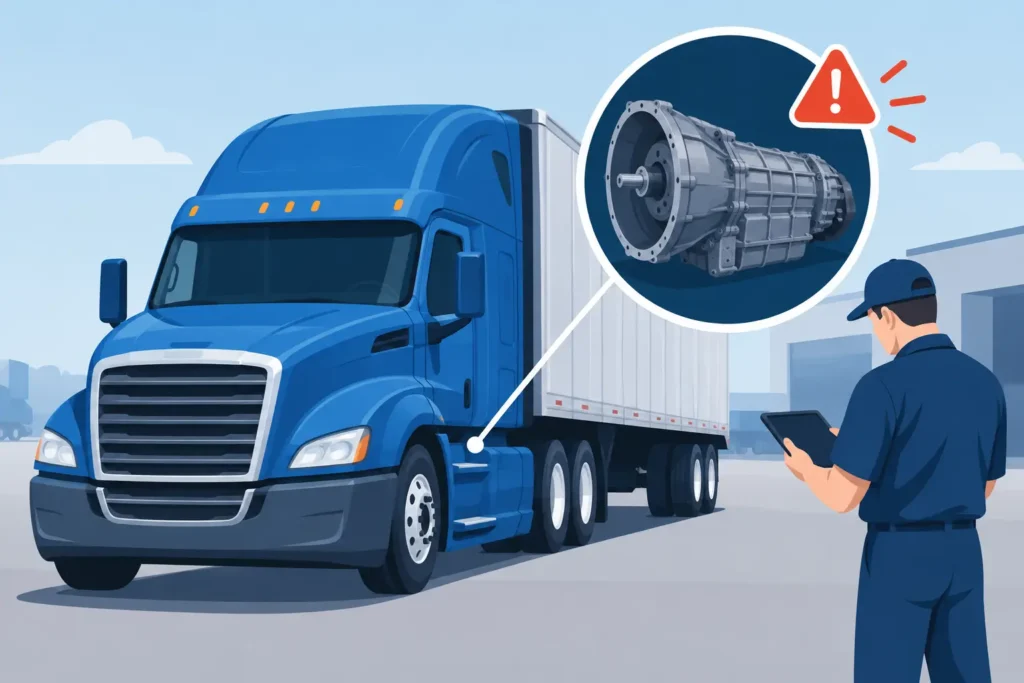
A loaded dump truck that suddenly hesitates leaving the site is more than an inconvenience. It can hold up a crew, delay material deliveries, and turn a manageable repair into a roadside recovery. Knowing the top signs of transmission trouble helps fleet operators and contractors act before a truck, loader, excavator, or skid steer loses productive time.
Transmission problems do not always begin with a complete failure. Many start as a change in shift quality, an unusual noise, a warning light, or a small fluid leak. The right response depends on the machine, the transmission type, and the symptoms, but waiting for the problem to get worse is rarely the low-cost option.
Top Signs of Transmission Trouble to Watch For
Delayed engagement when shifting into gear
If a truck takes longer than usual to move after selecting drive or reverse, pay attention. A noticeable delay can point to low or degraded transmission fluid, pressure loss, internal wear, or an electronic control issue. On a work truck, this may feel like a pause before the vehicle starts pulling. On heavy equipment, it may show up as delayed direction changes or weak engagement under load.
Do not compensate by increasing throttle aggressively. That can add heat and stress while masking the underlying issue. Record when it happens, whether the machine is cold or fully warmed up, and whether it occurs in both forward and reverse. Those details make diagnostics faster and more accurate.
Hard, slipping, or inconsistent shifts
A hard shift can feel like a bang, jolt, or abrupt gear change. Slipping is different: engine RPM rises, but vehicle speed or machine travel does not increase as expected. Either symptom can affect safe operation, especially when hauling, climbing grades, backing near crews, or moving material around a busy site.
Some equipment may shift differently when cold, and a minor change in feel is not automatically a transmission failure. But a repeated pattern, worsening shift quality, or slipping under load needs attention. Possible causes range from fluid condition and filter restrictions to clutch-pack wear, valve-body problems, faulty sensors, or calibration issues in electronically controlled units.
Burning smells or overheated fluid
Transmission fluid should not smell burnt. A sharp, hot odor after hauling, plowing, towing, or working on a grade may mean the transmission is overheating. Heat breaks down fluid, reduces its ability to lubricate and transfer pressure, and speeds up internal wear.
Overheating can result from an overloaded unit, a cooling-system issue, low fluid, contaminated fluid, or an internal fault. Stop and inspect rather than continuing to work the machine. If the fluid is dark, smells burnt, or contains visible debris, the system needs a proper assessment before it causes more extensive damage.
Leaks under the truck or equipment
A red or reddish-brown puddle is often associated with transmission fluid, although fluid colors vary by manufacturer and age. On trucks, inspect around transmission lines, the pan gasket, seals, cooler connections, and the area between the engine and transmission. On construction equipment, leaks may come from transmission housings, charge lines, fittings, or related hydraulic systems.
A small leak can become a major problem quickly if fluid level drops below the safe operating range. It also creates a housekeeping and safety issue on shop floors and job sites. Clean the area, identify the source, and repair the leak instead of repeatedly topping off fluid.
Whining, grinding, clunking, or humming noises
New noises deserve investigation, particularly if they change with gear selection, vehicle speed, engine speed, or load. A whine may be related to a pump or fluid-flow issue. Grinding or clunking can indicate internal wear, damaged gears, driveline concerns, or problems outside the transmission itself, such as universal joints or differentials.
The key is not to guess based on sound alone. A driveline fault can feel like a transmission problem, and an engine performance issue can make shifting seem abnormal. A complete inspection prevents repairs based on assumptions and helps avoid replacing parts that are not the real cause.
Warning lights, fault codes, and limp mode
Modern heavy trucks and equipment rely on electronic controls to manage shift timing, pressure, temperature, and protection strategies. A transmission warning light, check-engine light, or dash message should be treated as a maintenance priority, even if the unit still drives.
When a truck enters reduced-power or limp mode, the control system may be limiting operation to protect components. Continuing to run it can increase the damage, leave the vehicle stranded, or create an unsafe condition when the truck cannot accelerate or shift properly. Reading fault codes is a starting point, not a final diagnosis. The code identifies a circuit or condition that requires testing.
Why Transmission Symptoms Should Not Be Ignored
A transmission is tied directly to productivity. A highway truck cannot move a load without dependable gear engagement. A loader that will not travel properly cannot keep trucks fed. An excavator or dozer with weak travel can slow grading, trenching, and site preparation even if the engine and hydraulics are otherwise running.
There is also a safety factor. Unpredictable movement, loss of drive, delayed reverse engagement, or slipping on a grade can put operators, ground crews, and other vehicles at risk. Pulling a unit from service early may be inconvenient, but it is often safer and less expensive than waiting for a complete breakdown.
The trade-off is real: taking a truck or machine down costs time, especially during a tight schedule. But early diagnostics can sometimes identify a fluid, cooling, sensor, wiring, or adjustment issue before internal damage requires a major rebuild or replacement. Acting on the first reliable symptom gives you more repair options and better control over scheduling.
What Operators and Fleet Managers Should Do Next
Start with a clear report from the operator. Note the unit number, hours or mileage, operating conditions, warning lights, noises, and whether the issue happens cold, hot, loaded, unloaded, in forward, or in reverse. That information reduces diagnostic time and helps a technician separate a one-time event from a repeatable fault.
Next, check the basics according to the manufacturer’s procedure. Confirm fluid level and condition, look for external leaks, inspect accessible connectors and cooler lines, and verify that the cooling system is functioning. Do not mix fluids or add an unapproved product in an effort to solve slipping or harsh shifts. The wrong fluid can create more problems, particularly in newer automated, powershift, and hydrostatic systems.
If the transmission is slipping, overheating, making grinding sounds, or putting the unit into limp mode, limit operation and arrange service. For a loaded truck on the road or a machine holding up a site, mobile diagnostics may be the practical first step. Shop-based repairs are often needed when testing points to internal transmission work, major leaks, or component removal.
Tilling’s Repair Centre Vars supports Ottawa-area fleets and contractors with truck and heavy-equipment diagnostics and repairs focused on getting the right answer quickly. Whether the issue is on a transport truck, loader, excavator, dozer, or skid steer, a proper diagnosis helps protect the machine and the schedule built around it.
Preventing Costly Transmission Downtime
Preventive maintenance will not eliminate every failure, but it reduces avoidable ones. Follow the manufacturer’s service intervals for fluid and filters, use the specified fluid, inspect coolers and lines, and address leaks early. For working fleets, maintenance intervals should also reflect actual operating conditions. Frequent stop-and-go hauling, heavy towing, dusty sites, extreme temperatures, and long idle periods can be harder on equipment than mileage alone suggests.
Operator habits matter as well. Avoid overloading, allow equipment to warm up appropriately, use the correct travel range, and do not repeatedly force direction changes before the machine has fully stopped unless the manufacturer specifically permits it. A short pause during operation is cheaper than repeated shock loading on expensive components.
When shift quality changes, treat it as useful information from the machine. A fast inspection today can keep a minor transmission concern from becoming the reason tomorrow’s crew, trucks, and project schedule are all waiting.