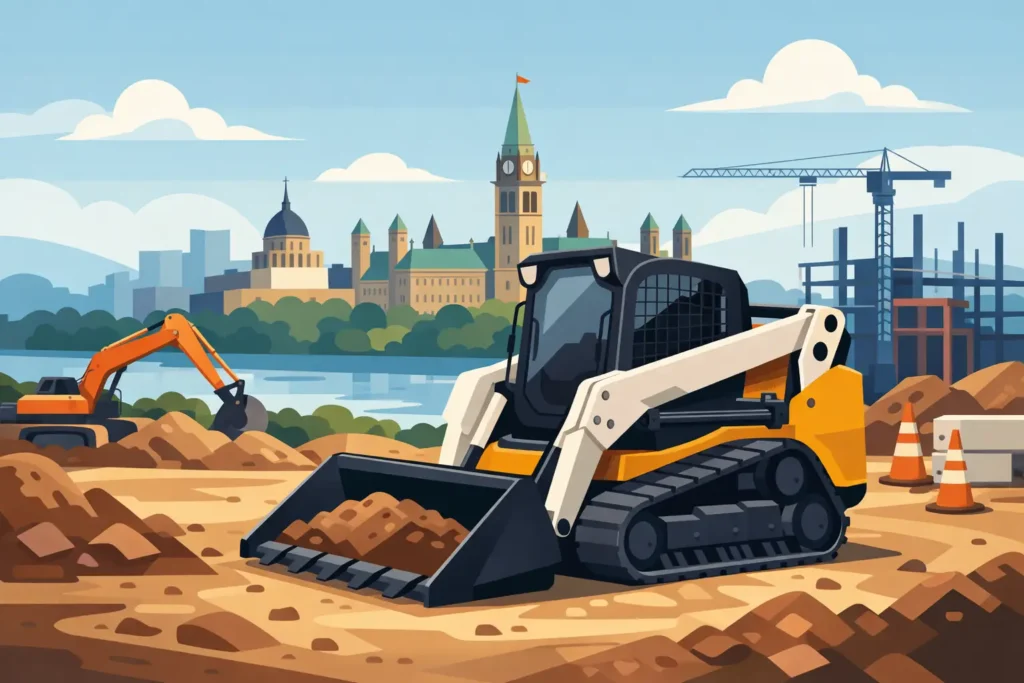
A tracked skid steer earns its keep when tires would spin, rut the ground, or leave a crew waiting for material to be moved. For contractors looking for a tracked skid steer rental Ottawa job sites can depend on, the right decision comes down to ground conditions, attachment needs, access, and how long the machine will be working. Renting the wrong size machine can slow production just as surely as renting one that is not ready to work.
At Tilling’s Repair Centre Vars, the focus is simple: provide job-ready equipment that helps keep excavation, landscaping, site preparation, and material-handling work on schedule. A tracked skid steer is compact enough for tight sites but capable enough to handle demanding daily work when it is matched properly to the task.
When a Tracked Skid Steer Is the Better Rental Choice
Tracked skid steers are built for traction and lower ground pressure. Their rubber tracks spread machine weight over a larger surface than tires, which makes a real difference on soft soil, wet ground, loose fill, and uneven terrain. On Ottawa-area sites, that can mean the difference between continuing work after rain and spending the day recovering equipment or repairing ruts.
They are often a practical choice for new builds, lot clearing, landscaping, drainage work, backfilling, and site cleanup. A tracked skid steer can carry and grade material, load trucks, move pallets, clear brush, and support crews with the right attachment. Its compact footprint also makes it useful where larger loaders cannot maneuver efficiently.
That does not mean tracks are always the best answer. If the machine will spend most of its time on finished asphalt, concrete, or long stretches of hard abrasive surface, a wheeled skid steer may be the more economical fit. Rubber tracks wear faster on hard surfaces, and a tracked machine should not be treated as a substitute for a road vehicle. The rental choice should reflect the actual work, not simply the biggest machine available.
Choosing the Right Tracked Skid Steer Rental in Ottawa
Start with the material being handled. Light grading and landscape preparation may not require the same operating capacity as moving wet clay, demolition debris, aggregate, or heavy pallets. Bucket capacity, rated operating capacity, lift height, and hydraulic flow all affect how well the machine performs. A machine that is undersized may require extra passes and put unnecessary strain on the operator and equipment. One that is oversized may create access problems or add rental cost without improving output.
Access is the next question. Measure gates, laneways, trailer access, and the work zone itself before arranging a rental. Account for the width of the machine and bucket, the space needed to turn, and any overhead restrictions. A tracked skid steer is highly maneuverable, but it still needs room to load, grade, and work safely around laborers, trucks, and structures.
Match the Attachment to the Work
The machine is only part of the rental plan. The attachment determines what it can accomplish during the day. A standard bucket handles general loading, backfilling, and cleanup. Forks can move palletized materials, while a grapple bucket can help with brush, debris, and irregular material. Grading attachments, augers, and trenching tools may be appropriate depending on the scope of work and hydraulic requirements.
Confirm attachment compatibility before the machine arrives. High-flow attachments need a machine with the hydraulic capacity to run them properly. It is also worth confirming whether the attachment changes the machine’s width, visibility, or working clearance. These details are easy to overlook during planning and expensive to solve once a crew is already on site.
Consider the Ground Under the Machine
Tracks perform well in mud and loose soil, but operators still need a plan for unstable ground. Deep mud, saturated subgrades, steep slopes, and buried voids can stop any machine. Walk the site before starting work and identify soft edges, utility areas, drainage routes, and areas where the machine could become stuck.
Use travel paths that limit repeated turning in one location. Tight counter-rotating turns can disturb turf and soft ground, even with tracks. Where finished landscaping or sensitive surfaces are involved, plan material staging and travel routes so the machine does not cross the same area unnecessarily.
Rental Terms Should Follow the Schedule
A daily rental can make sense for a short cleanup, a one-day material move, or a specific attachment task. For multi-stage projects, weekly or longer-term arrangements are usually easier to manage and can provide better value than repeatedly extending short rentals. The right term depends on the work sequence, weather allowance, operator availability, and whether the machine will be productive every day.
Be realistic about the schedule. If an excavation crew is waiting on deliveries, inspections, or another trade, booking a machine for too short a window can create pressure and added cost. On the other hand, holding equipment when there is no work planned ties up budget and yard space. A local rental partner that understands job-site scheduling can help align the equipment term with the actual production plan.
Delivery and pickup should also be part of the conversation. A tracked skid steer needs proper transport, secure loading, and a clear drop-off area. Make sure the site has room for the delivery truck to enter, unload, and exit safely. If access is limited, arrange delivery timing around other vehicles and site traffic.
A Quick Pre-Start Check Prevents Lost Hours
A rental machine should arrive ready for work, but the operator should still inspect it before putting it into production. This is not paperwork for its own sake. A five-minute check can prevent a longer delay later in the shift.
Before operation, check the machine for visible leaks, damaged hoses, loose fittings, track damage, and debris packed into the undercarriage. Confirm that the bucket or attachment is pinned and connected correctly. Test the controls, safety interlock, horn, lights, backup alarm, and attachment functions in a clear area. If the machine is being used with forks or a specialized attachment, make sure the operator understands the load limits and operating position.
Operators should also watch the undercarriage throughout the day. Mud, rocks, wire, and construction debris can collect around tracks and rollers. Clearing buildup during scheduled breaks helps reduce wear and can prevent a track issue from turning into a shutdown. Never attempt to clear material from moving components, and follow safe lockout procedures before inspecting or servicing any equipment.
Keep the Rental Productive, Not Just Busy
The best use of a tracked skid steer is organized work. Stage material close enough to reduce long travel distances but far enough from excavations, traffic lanes, and active work zones to stay safe. Avoid using a skid steer for tasks better suited to another machine, such as hauling material over long distances or lifting loads beyond its rated capacity.
Communication matters on crowded sites. Establish a clear travel route, use spotters where visibility is limited, and keep laborers out of the machine’s swing and travel area. Operators should slow down on slopes, keep loads low while traveling, and avoid side-hilling with elevated loads. Productivity is not about rushing through a shift. It is about moving material consistently without damaging the site, the machine, or the schedule.
Local Support Matters When the Work Cannot Wait
Equipment rental is not only about having a machine delivered. It is about knowing there is a responsive local partner if a question, mechanical issue, or changing job requirement comes up. Contractors managing active sites need direct answers, workable rental terms, and equipment support that recognizes the cost of downtime.
Before booking, be ready to explain the job location, expected rental duration, access conditions, material being handled, and any attachment requirements. That information helps match the tracked skid steer to the work instead of sending a machine that is merely available.
A properly sized tracked skid steer can turn soft ground, tight access, and heavy material movement into a manageable workday. Plan the rental around the site conditions, use the right attachment, and keep the machine inspected and operated safely so your crew can stay focused on the next load, the next grade, and the next deadline.