
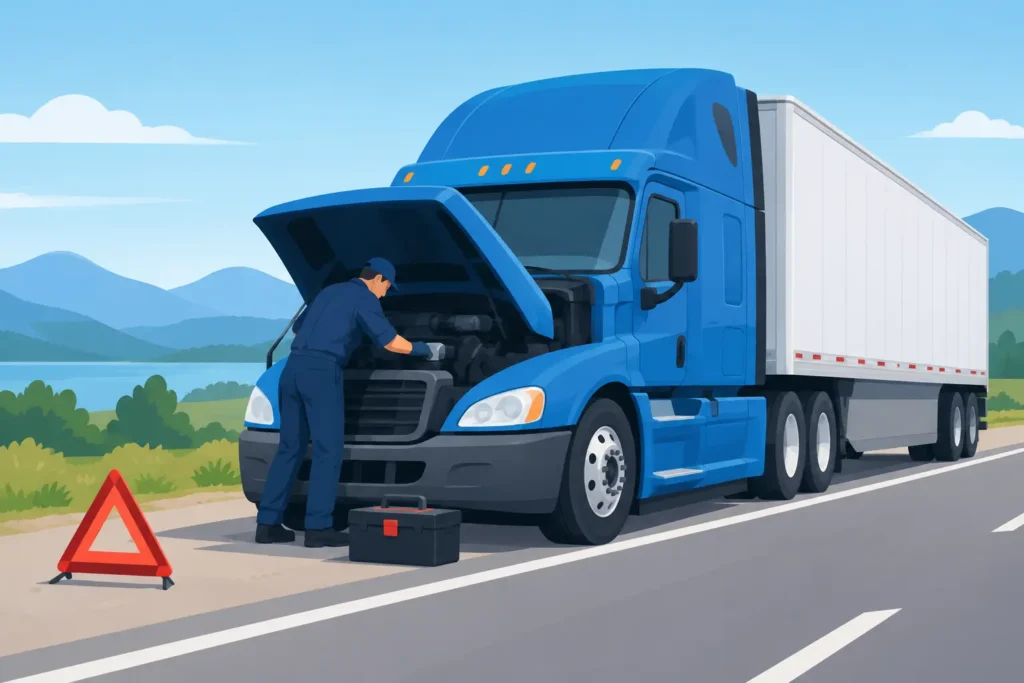
A loaded dump truck loses power on the shoulder before daylight, with a crew waiting at the job site and a delivery window getting tighter by the minute. This roadside repair example shows why the right response is not simply getting the truck to restart. It is making the vehicle safe, finding the actual fault, and deciding whether a mobile repair can return it to service or whether it needs to come back to the shop.
For contractors, haulers, and fleet operators, a roadside breakdown affects more than one truck. It can delay equipment deliveries, leave operators standing by, interrupt material movement, and create safety concerns for everyone working near the vehicle. A practical repair plan protects the driver first, then limits the impact on the day’s work.
A roadside repair example from the first call
Picture a tri-axle dump truck hauling aggregate to a commercial site outside Ottawa. The driver reports that the engine is running rough, the check-engine light is on, and the truck will not pull under load. He has safely moved off the active lane, turned on warning lights, and contacted dispatch.
The first call should gather useful details, not just a location. The driver should report warning lights, engine behavior, visible leaks, smoke, unusual noises, recent repairs, and whether the truck can idle safely. Dispatch also needs the truck number, load status, exact roadside conditions, and whether the vehicle is blocking traffic or access to a work zone.
Those details help the technician arrive prepared. A no-start complaint may require batteries, cables, a scan tool, and charging-system test equipment. A suspected air leak or hydraulic problem may call for different fittings, hose material, and tools. Sending a service truck without the likely parts and diagnostic equipment wastes the most valuable resource on a breakdown day: time.
Before any repair begins, the technician assesses the location. A narrow shoulder, poor visibility, moving traffic, soft ground, or an unstable load can change the plan immediately. In some cases, the safest and fastest decision is to arrange a tow and complete the work in a controlled shop environment. Roadside service is valuable, but it is never worth exposing a driver or technician to unnecessary risk.
Diagnose the fault before replacing parts
In this example, the technician connects diagnostic equipment and finds low fuel-rail pressure under demand. A quick visual inspection also shows fuel around a connection near the fuel filter housing. The truck may be able to idle, but it cannot maintain pressure when the driver accelerates or climbs with a load.
That is a different problem from a failed turbocharger, injector issue, or transmission fault, even though the driver may describe all of them as a loss of power. Proper diagnosis keeps a roadside repair from turning into expensive guesswork.
The technician checks the fuel filter condition, supply lines, clamps, fittings, and visible damage. After identifying a damaged fuel line connection, the repair can move forward: isolate the fuel supply, replace the faulty component, prime the system correctly, clear applicable fault codes, and test for leaks.
The final test matters as much as the repair itself. The truck should be brought up to operating temperature, checked for stable pressure, and driven or load-tested as conditions safely allow. If the fault code returns or pressure drops again, the truck should not be sent back to work just because it starts. A second breakdown with a full load can cost more than taking the truck out of service for a complete repair.
When a roadside fix makes sense
A mobile repair is often the right choice when the fault is contained, the repair can be completed safely, and the technician can verify the result. Common examples include a failed battery connection, damaged air line, blown hose, loose electrical connection, minor fuel-system leak, or an accessible sensor issue.
It depends on the vehicle and the work required. A roadside hose repair may get an excavator or truck operating again, but a hose failure caused by a damaged fitting, contaminated hydraulic oil, or a failing pump needs a broader inspection. Fixing only the visible leak can put the machine right back into downtime later that week.
A roadside repair is also not the best answer when the truck has major engine damage, severe overheating, brake concerns, transmission failure, a compromised load, or an issue that requires lifting equipment and extended teardown. Bringing the unit to a shop may take longer in the moment, but it gives the repair team the room, tooling, and inspection time needed to solve the whole problem.
What the truck operator should do while waiting
The driver plays a major role in keeping the response safe and efficient. Once the vehicle is in the safest available position, the driver should set warning devices as required, stay aware of traffic, and avoid continuing to operate a truck that is overheating, losing air pressure, leaking fuel, or showing serious engine warnings.
Trying to limp a truck to the next exit can turn a repairable fault into a damaged engine, failed aftertreatment component, or unsafe roadside situation. The schedule matters, but avoiding a larger repair matters more.
The driver should not disconnect lines, bypass safety systems, or attempt repairs beyond company procedures. Clear photos of leaks, dash warnings, tire damage, or broken components can help the technician prepare, provided they can be taken without entering a traffic hazard. A simple, accurate report is more useful than assumptions about what part has failed.
The real cost is lost production
A roadside service call has a visible cost: travel time, labor, diagnostics, parts, and possibly towing. The less visible cost can be much larger. A down dump truck can hold up a paving crew. A disabled tractor-trailer can delay a delivery. An excavator that cannot be moved may leave an entire site waiting for material handling to resume.
That is why repair decisions should be based on total operating impact, not just the lowest immediate invoice. A quick temporary repair may be appropriate when it safely gets the truck back to the yard for scheduled follow-up. In another situation, replacing the affected part fully on the roadside may prevent repeat downtime and protect the next day’s route.
For a small or mid-sized fleet, one disabled unit can remove a meaningful share of daily capacity. Local mobile service reduces travel delays, while shop-based diagnostics provide the deeper support needed for faults that cannot be verified on the shoulder.
Preventing the next roadside call
Many roadside failures give warning signs before they stop a truck. Slow cranking, repeat low-air alerts, damp hydraulic fittings, chafed wiring, fuel odors, changing transmission behavior, and recurring fault codes should be inspected before they become an emergency.
A useful maintenance routine does not need to be complicated. Drivers should complete consistent pre-trip inspections and report changes early. Fleet managers should track recurring issues by unit, keep service records current, and schedule repairs around operating hours when possible. Technicians can then look for patterns, such as the same hose routing problem on several units or frequent battery failures caused by a charging-system issue.
For equipment working on rough construction sites, inspection needs to match the conditions. Excavators, dozers, loaders, skid steers, and dump trucks see vibration, dust, mud, debris, and long idle periods that can work connections loose and shorten component life. Preventive service is not about adding unnecessary work. It is about catching small failures when the machine is parked safely instead of when it is needed most.
A repair partner should support the whole operation
Roadside response is strongest when it connects to the rest of a fleet’s maintenance plan. The technician who handles an urgent truck issue should also be able to identify follow-up work, explain what failed in plain language, and help the operator make a clear repair decision.
Tilling’s Repair Centre Vars supports commercial operators with mobile and shop-based truck, trailer, hydraulic, and heavy-equipment repairs because downtime rarely arrives at a convenient time. When a unit cannot be repaired safely at the roadside, having access to experienced diagnostics, repair capacity, and equipment options helps keep the larger project moving.
The best roadside repair is not always the fastest possible fix. It is the safe, verified decision that gets the right equipment back to work without creating another breakdown a few miles down the road.