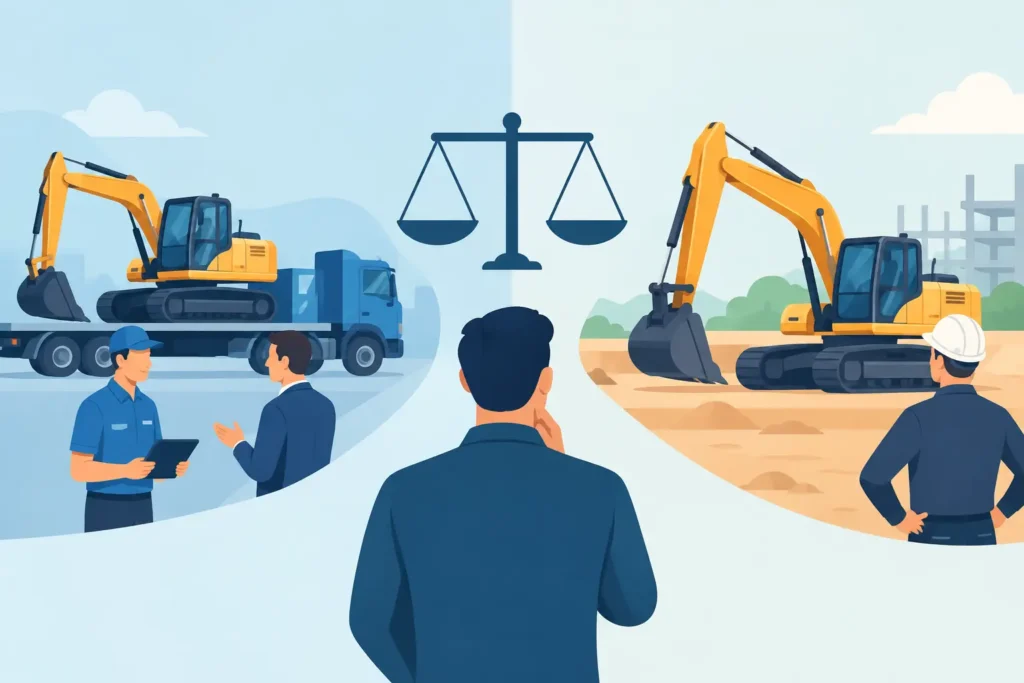
A dozer sitting between jobs still costs money. So does an excavator that is due for an undercarriage repair just as a new site opens. Rental versus equipment ownership is not a simple question of daily rate versus purchase price. For Ottawa-area contractors, landscapers, haulers, and property developers, the right answer comes down to how often the machine works, how predictable the work is, and who carries the cost when something fails.
The best decision protects two things: cash flow and uptime. A machine that fits the budget but delays a crew is expensive. A rental that arrives job-ready and keeps a project on schedule can be the better value, even when ownership looks cheaper on paper.
Start With the Work in Front of You
Before comparing rates, look at the type of work your operation actually performs. A machine used nearly every working day, across multiple seasons, has a stronger case for ownership. A machine needed for one subdivision, a short land-clearing contract, or occasional loading work may be better rented.
Usage is more than total hours. Consider whether the equipment is needed at the same time as other machines, whether jobs are spread across several sites, and whether the schedule has room for a breakdown. A landscaping company may own a compact machine used throughout the season but rent a larger tracked excavator for drainage work. A hauling company may own its core trucks while renting a loader when material volumes spike.
Ask practical questions: Will this machine have enough billable hours? Is there a confirmed pipeline of work after the current project? Can the crew operate it efficiently? Will the machine sit through winter, permit delays, or slow periods? Those answers often matter more than the sticker price.
Rental Versus Equipment Ownership: Compare the Full Cost
The purchase price is only the first cost of ownership. Financing interest, insurance, transport, storage, fuel, attachments, inspections, preventive maintenance, wear parts, and major repairs all belong in the calculation. Depreciation matters too. Equipment can retain value, but resale value depends on hours, condition, service records, market demand, and the cost of repairs needed before sale.
Renting turns many of those unknowns into a known operating cost. You pay for the machine while it is working for the job, not during idle weeks. This is especially useful when bidding work with a defined start and finish date. A daily, weekly, or long-term rental can be built into the job estimate with far less guesswork.
That does not mean rental is automatically cheaper. If a loader, skid steer, or dump truck is in steady use and the business has the capacity to maintain it properly, ownership can lower the cost per hour over time. The key is comparing total ownership cost against expected productive hours, not comparing a monthly loan payment against a rental invoice.
Keep Working Capital Available
Buying equipment ties up capital that may be needed elsewhere: payroll, materials, subcontractors, fuel, insurance, or the next opportunity that comes through the door. For growing contractors, preserving cash can be the difference between taking on another project and passing on it.
Rental gives a business the ability to match equipment cost to current revenue. It can also make it easier to take on a larger job without buying a machine that may not be needed afterward. A contractor can rent the excavator, compaction equipment, screener, or additional hauling capacity required for the peak period, then return it when the workload drops.
Ownership makes more sense when financing is manageable, work is consistent, and the machine supports a long-term operating plan. The decision should strengthen the business, not leave it short on cash when an unexpected repair or slow-paying customer appears.
Uptime Is Often the Deciding Factor
Every owner knows a machine can look dependable until it does not start at 6:30 a.m. Hydraulic leaks, engine faults, transmission issues, tire damage, electrical problems, and undercarriage wear do not wait for a convenient week. When a machine fails, the cost includes more than the repair bill. Crews wait, schedules slip, trucks may be left standing, and the next trade can be delayed.
Ownership gives you control over the machine’s history. A well-maintained fleet is familiar to operators and can be equipped with the attachments your crews use every day. But that control comes with responsibility. Planned maintenance needs to be scheduled, inspections must be completed, and repairs need fast attention before a minor issue becomes a job-stopping failure.
Rental shifts much of the maintenance burden away from the customer. A properly prepared rental machine should arrive ready for the site, with the capacity and condition needed to perform the work. If an issue develops, responsive support matters. A rental supplier that also understands heavy equipment repair can diagnose problems quickly and help limit downtime instead of treating the breakdown as someone else’s problem.
For operators in Kanata, Orleans, Nepean, Barrhaven, Stittsville, Rockland, and Carleton Place, local response is part of the value. Waiting days for a technician or replacement machine can erase any savings from a lower rate.
Consider the Machine Type and Repair Exposure
Not every asset deserves the same ownership strategy. Core equipment that is used daily and is easy for your team to support often belongs in the owned fleet. Specialized, high-cost, or seasonal equipment is commonly rented until demand proves consistent enough to buy.
Tracked excavators and dozers can generate substantial repair exposure as hours accumulate. Undercarriage components, hydraulics, final drives, cooling systems, and emissions-related issues can quickly change the economics of a machine. Material screeners and compaction equipment may be essential on specific jobs but remain idle between them. Renting lets a contractor access the right capacity without carrying the year-round cost.
Age also matters. A paid-off machine is not free if it requires repeated repairs or creates missed shifts. On the other hand, a newer owned machine with a documented maintenance plan may be more predictable than renting several different units over the season. Evaluate condition and service support honestly. If you cannot keep a unit reliable, it is not a bargain.
A Hybrid Fleet Usually Gives the Best Flexibility
Many successful contractors do not choose one side completely. They own the equipment that supports regular work and rent for project peaks, specialty tasks, breakdown coverage, and new opportunities.
A site contractor might own a tracked skid steer and a dependable dump truck, then rent a wheel loader for a large aggregate job. A builder may rent an excavator for foundation excavation rather than keep one parked between projects. A trucking operation may use rental equipment to maintain production while a company-owned truck, trailer, or loader is in the shop.
This approach also helps when bidding unfamiliar work. Renting allows you to test whether a machine size, attachment, or equipment category is the right fit before making a major purchase. It reduces the risk of owning the wrong machine for the jobs that actually come in.
Tilling’s Repair Centre Vars supports this kind of practical fleet planning with job-ready rentals and heavy equipment repair for owned machinery. The goal is not to force every customer into a rental or a purchase. It is to keep the work moving with equipment that suits the job and repair support when a fleet machine needs attention.
Make the Decision Before the Job Is Urgent
The worst time to decide whether to rent or buy is when a crew is waiting at the gate. Review upcoming work, current machine hours, maintenance needs, and available cash before the busy season or before submitting a major bid. Include transportation, operator availability, attachments, site access, and safety requirements in the plan.
If the workload is consistent and the machine will stay productive, ownership may build long-term value. If demand is temporary, uncertain, or tied to a specialized task, rental can reduce risk and preserve capital. When your owned equipment goes down, a rental can also protect the schedule while repairs are completed.
Choose the option that gives your crew reliable equipment when the work has to happen. A machine should earn its place on the jobsite by helping you finish safely, stay on schedule, and take the next job with confidence.