A soft trench bottom, uneven granular base, or poorly compacted parking area can turn a straightforward job into a costly callback. The right compaction equipment rental Ottawa contractors choose helps create a stable base before concrete, asphalt, landscaping, utilities, or structures go in. Just as important, the machine needs to arrive ready to work and fit the actual conditions on site.
For contractors, landscapers, property developers, and fleet operators, renting compaction equipment is often the practical answer when a project has a defined scope, a short schedule, or a machine in the fleet is down. The goal is not simply to get a compactor to the site. It is to get the correct machine, for the correct material and area, without adding avoidable downtime.
Match the Compactor to the Job
Compaction is not one-size-fits-all. Soil type, lift depth, moisture, access, and required density all affect which machine makes sense. A unit that works well on crushed aggregate in an open lot may be the wrong choice for a narrow utility trench or clay-heavy material around a foundation.
Before arranging a rental, confirm what material is being compacted, how much ground must be covered, the width of the work area, and whether the job has tight access points. It also helps to know the expected lift thickness and whether the work follows a project specification or inspection requirement. These details make it easier to avoid renting a machine that is too light, too large, or too slow for the work.
Plate Compactors for Tight Areas and Finish Work
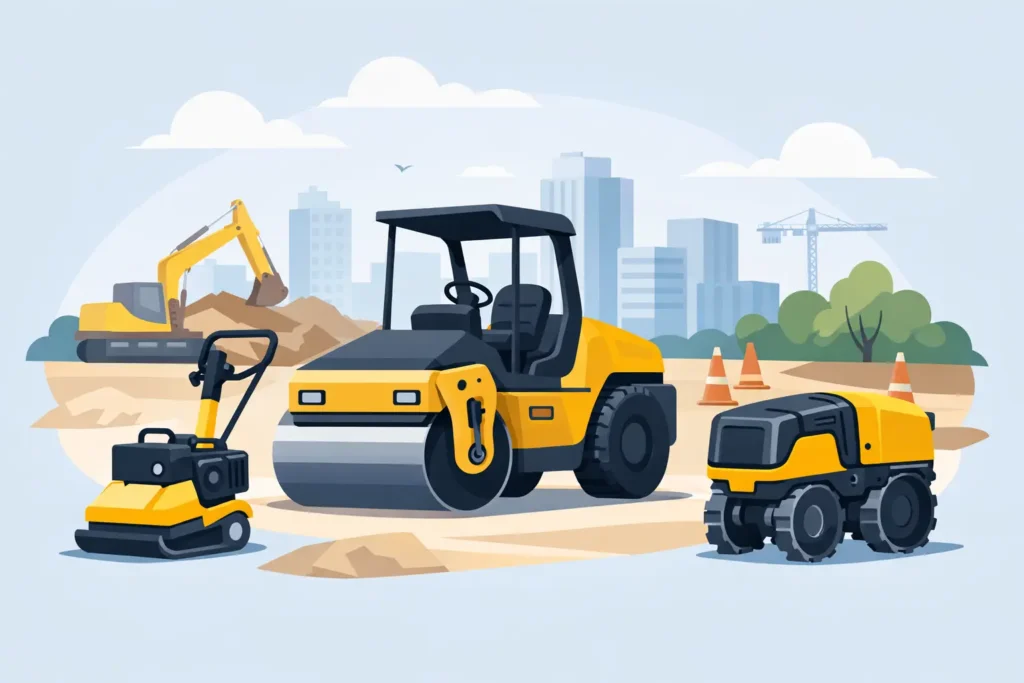
Plate compactors are a practical choice for smaller areas, granular fill, sidewalks, interlock preparation, shed pads, and work beside buildings. Their compact footprint makes them useful where a larger roller cannot get close enough to the edge or fit through an access gate.
A reversible plate provides more control and production than a basic forward plate, especially when working in confined areas where turning around repeatedly costs time. For a landscaping crew preparing a patio base or a contractor compacting granular material around a service connection, that additional control can make the work cleaner and faster.
Plate compactors have limits. They are not the best answer for deep lifts, broad roadwork, or highly cohesive soil. Trying to force a small plate to handle a large or difficult compaction task usually means more passes, inconsistent results, and labor that could be better used elsewhere.
Trench Rollers and Ride-On Machines for Production Work
When the job involves deep utility trenches, heavier soils, road shoulders, larger pads, or long production runs, a heavier compactor is often the better fit. Trench rollers are designed to work in confined trench applications while delivering the impact and coverage needed for more demanding material. Remote operation can also help keep the operator out of the trench area during compaction.
Ride-on rollers are more efficient for open areas such as commercial yards, lanes, subgrades, parking areas, and road preparation. They cover ground quickly and provide a more consistent finish than smaller walk-behind equipment when there is room to operate.
The trade-off is access and transport. A larger unit may improve production, but it still has to reach the work zone safely. Check gate widths, slopes, turning room, overhead restrictions, and the condition of the route into the site before choosing a machine. A productive roller parked outside a restricted work area will not help the schedule.
Ottawa Ground Conditions Can Change the Plan
Ottawa-area jobs regularly deal with changing weather, freeze-thaw cycles, wet ground, clay, mixed fill, and seasonal schedule pressure. Material that compacts well in dry conditions may need additional preparation after rain. Waterlogged soil cannot be fixed by simply making more passes with a heavier machine.
If material is too wet, it may pump, rut, or lose stability under compaction. If it is too dry, achieving the intended density can also become difficult. In some cases, the right move is to adjust moisture, replace unsuitable material, reduce lift thickness, or allow time for the ground to dry. These decisions cost less than building on an unstable base and repairing the result later.
The same applies to winter work. Frozen material and frozen ground need to be assessed before compaction begins. Rental equipment can provide the force required for the job, but it cannot make unsuitable material meet project requirements. Good site preparation and realistic sequencing still matter.
Choose Rental Terms That Follow Your Schedule
A daily rental can make sense for a quick repair, a short trench backfill, or a one-time landscaping project. Weekly rentals generally suit crews that have several days of scheduled prep work or a series of active sites. Long-term arrangements are often more economical for contractors with ongoing earthwork, property development, utility, or site servicing work.
The lowest daily rate is not always the lowest job cost. Consider how long the equipment will actually be needed, the time required for delivery and pickup, fuel planning, operator availability, and the risk of schedule changes. If weather delays are likely or inspections can hold up the next stage, a flexible rental plan can be more valuable than a narrow rental window.
It is also worth considering whether renting is better than tying up an owned machine. When a contractor’s compactor is being repaired, committed to another site, or due for maintenance, a rental can keep the crew productive rather than waiting for equipment to return.
Ask About Machine Condition and Local Support
Compaction equipment works in dust, moisture, mud, and vibration. That makes dependable maintenance more than a convenience. Before equipment goes out, it should be inspected for operating condition, controls, hoses, drums or plates, engine performance, and obvious safety concerns.
Local support matters when the work is already underway. If a machine has an issue, the contractor needs a clear response, not a vague promise. A provider that understands both rentals and equipment repair can often diagnose problems faster because its team works with the same type of machinery in the shop and in the field.
Tilling’s Repair Centre Vars supports Ottawa-area operators with rental equipment and mechanical service from the same local operation. That combined approach is useful when a project depends on more than one machine, or when your own loader, excavator, truck, or skid steer needs attention while rental equipment keeps the job moving.
Plan Delivery and Site Access Before the Machine Arrives
A rental performs best when the logistics are handled before delivery day. Identify where the machine will be unloaded, where it will be parked overnight, and who on site is responsible for receiving it. Make sure the work area is accessible and that loose debris, unstable ramps, and unnecessary traffic are addressed.
For larger compactors, confirm that the site has a suitable unloading area and room for safe maneuvering. For trench work, plan the compaction sequence with excavation, bedding, pipe installation, and backfill crews so the machine is not waiting while other work is incomplete.
Clear communication also reduces damage and delays. Operators should understand the controls, the boundaries of the work area, and the material being compacted. If the project has specified density targets, maintain the records and testing process required by the owner, engineer, or inspector.
Get Better Results With the Right Operating Approach
Even the right machine can produce poor results if it is used incorrectly. Compact material in controlled lifts rather than trying to compact an overly deep layer all at once. Make enough passes to achieve uniform results, but avoid excessive passes that waste fuel, wear equipment, and can disturb certain materials.
Keep an eye on moisture and material consistency throughout the day. A load of fill can change from one delivery to the next, especially on larger sites. Operators should also avoid working too close to unsupported trench edges and follow the job’s trench safety requirements at all times.
For projects where the finished surface will carry traffic, support foundations, or receive asphalt or concrete, a careful compaction plan protects everything that comes next. The few hours spent choosing the right equipment and preparing the ground can prevent days of rework later.
When your schedule depends on stable ground, start with the material, access, and production target, then choose rental equipment that fits the work. A quick conversation before mobilization can help keep the compactor productive, the crew working, and the next phase of the job on time.