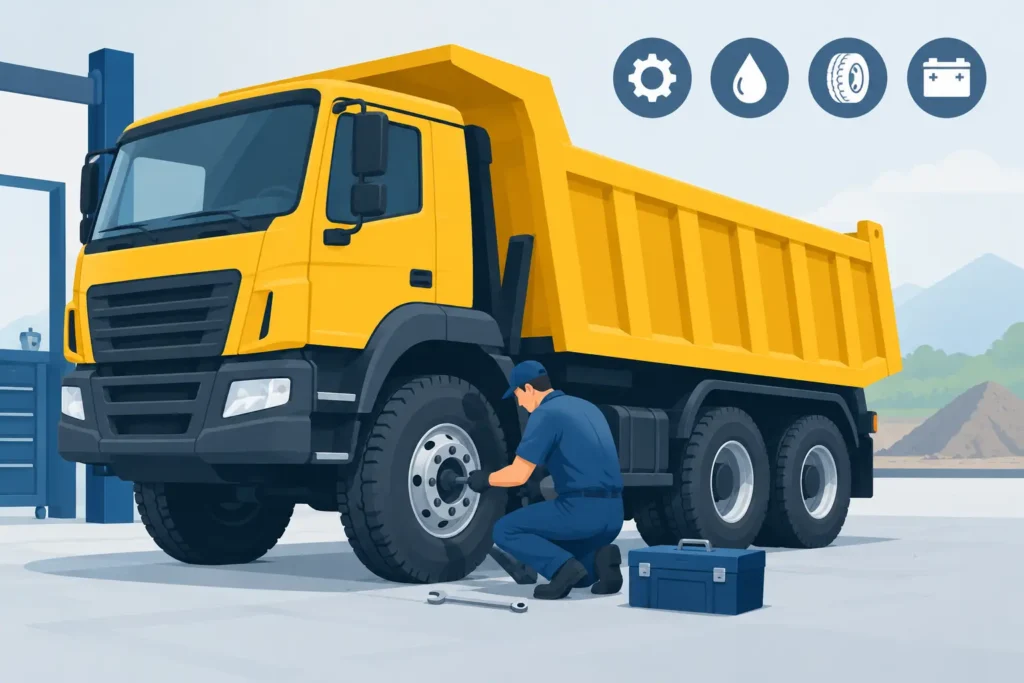
A dump truck can look ready for work right up until a hydraulic hose bursts, brakes start pulling, or a tailgate will not release at the unload site. Essential dump truck maintenance is what catches those problems before they turn into a missed delivery, an unsafe truck, and a crew waiting on material. For haulers, contractors, and site operators, the goal is simple: keep the truck safe, legal, and moving through every shift.
Dump trucks work harder than most highway trucks. They haul heavy, uneven loads, cycle their hydraulic systems repeatedly, travel on rough jobsite access roads, and often idle for long periods. That kind of work puts wear on components that a standard road-use maintenance schedule can overlook. A practical maintenance plan should be based on operating hours, mileage, payload, road conditions, and the truck’s actual duty cycle.
Essential Dump Truck Maintenance Starts Before the Shift
The walk-around inspection is the fastest way to prevent a small defect from becoming a roadside call or jobsite delay. It needs to be more than a quick look at the tires while the engine warms up. Drivers should inspect the truck before every shift and report changes while they are still easy to diagnose.
Start by checking for fresh leaks under the engine, transmission, hydraulic tank, and hoist cylinders. A light film around an older fitting may not stop the truck today, but a drip, wet hose, or fluid level that keeps dropping needs attention. Hydraulic failures can become dangerous quickly when the bed is raised, so do not treat them as a next-week repair.
Check engine oil, coolant, power steering fluid, washer fluid, and hydraulic oil at the correct intervals and with the body lowered. Look at belts, hoses, battery connections, and visible wiring for rubbing, cracking, loose clamps, or corrosion. On diesel trucks, watch for warning lights, hard starting, unusual exhaust, or a change in idle quality. Those signs often point to a developing fuel, air, emissions, or electrical issue.
Tires deserve a close look every day. Check pressure, sidewall damage, exposed cords, cuts, lodged stones, and uneven tread wear. A dump truck with underinflated tires runs hotter and handles poorly under load. Uneven wear can also reveal an alignment, suspension, wheel-end, or steering problem that will only get more expensive if it is ignored.
Before leaving the yard, verify that lights, reflectors, mirrors, horn, wipers, backup alarm, camera systems, and brakes are working as intended. Make sure the body is fully down, the tailgate is secure, and the tarp system operates properly. These checks protect the driver, other road users, and the company’s ability to keep hauling without interruption.
Keep the Hoist and Hydraulic System Under Control
The hoist system is where dump truck maintenance differs most from standard fleet service. A truck may run well with a worn hydraulic component, but it is not a truck that should be raising a loaded body.
Inspect hydraulic hoses for abrasion, weather checking, bulges, seepage, and loose fittings. Hoses routed near moving components or sharp edges need particular attention. Replace damaged hoses before they fail, and use the correct hose rating and fittings for the application. A temporary repair that does not match system pressure can create a bigger failure later.
Check hydraulic fluid level and condition according to the manufacturer’s procedure. Dark, milky, foamy, or contaminated oil can indicate water intrusion, overheating, aeration, or internal wear. Filter changes matter just as much as oil changes because contamination can damage pumps, control valves, and cylinders.
Inspect hoist cylinders for scored rods, damaged seals, loose mounts, and signs of side loading. Grease pivot points on the schedule recommended for the truck and body. Skipping grease may save a few minutes at the start of the day, but it accelerates wear in pins and bushings that are costly to replace.
Drivers should also pay attention to how the body raises and lowers. Slow lifting, jerky movement, drifting, unusual pump noise, or a body that will not hold position are warning signs. Never work beneath a raised body unless approved body props or safety stands are correctly installed. Hydraulic pressure alone is not a safe support system.
Brakes, Suspension, and Steering Carry the Load
Heavy loads expose weaknesses in brake and suspension systems fast. Brake inspections should include pads or shoes, drums or rotors, air lines, chambers, slack adjusters, brake response, and signs of heat damage. Air leaks, low-pressure warnings, pulling under braking, or a longer stopping distance require immediate attention.
Suspension and steering checks should cover springs, airbags, shocks, torque rods, bushings, U-bolts, steering linkages, and wheel bearings. Loose or worn parts can cause wandering, tire wear, poor ride quality, and unstable handling when the truck is loaded. On rough sites, these components take repeated impacts that may not be obvious from the cab.
Do not overlook the frame, body mounts, crossmembers, and tailgate hinges. Look for cracked welds, damaged rails, loose fasteners, and body damage caused by uneven loading or hard dumping. Catching a small crack early is usually a straightforward repair. Letting it spread can take the truck out of service for much longer.
Build Service Intervals Around Real Work Conditions
Mileage alone does not tell the full maintenance story for a dump truck. A truck hauling short loads in stop-and-go traffic, idling at a paving site, or running off-road for most of the day may need more frequent service than a truck covering highway miles. Track engine hours, idle hours, load type, and operating conditions alongside mileage.
A strong preventive program records inspections, fluid services, filter replacements, repairs, tire work, and recurring faults for each unit. That history helps identify patterns. If one truck repeatedly needs hydraulic fittings tightened or burns through front tires, the issue may be in the operating conditions, loading practices, alignment, or component setup rather than the individual repair.
Planned service also makes parts and labor easier to schedule. Oil changes, brake service, and hose replacements can be completed during slower periods instead of during an emergency breakdown. For fleets that cannot afford to park a truck, scheduling a backup rental unit may be the practical choice while major work is completed.
Know When a Driver Report Needs Immediate Action
Not every issue requires taking a truck out of service, but some do. Drivers need a clear process for reporting defects without feeling pressure to keep moving. A minor marker light issue is different from a brake warning, a hydraulic leak, or steering play. The right decision depends on the severity of the defect, the load, the route, and the risk to the driver and public.
Remove the truck from service and arrange a qualified inspection when there is a significant fluid leak, braking concern, damaged tire, overheating issue, inoperative safety equipment, steering problem, body-control fault, or structural damage. Continuing to haul may turn a repairable fault into a collision, a failed inspection, or a complete component failure.
For Ottawa-area operators, Tilling’s Repair Centre Vars supports both planned maintenance and urgent truck, trailer, hydraulic, and heavy-equipment repairs. The value of a local service partner is not just fixing the failure. It is getting a clear diagnosis, the right repair, and a realistic path back to work without unnecessary delays.
A dump truck earns its keep by completing loads safely and predictably. Give drivers time for proper inspections, service the systems that take the hardest abuse, and act on small changes before they become big problems. That is how a fleet stays ready when the next load has to move.