
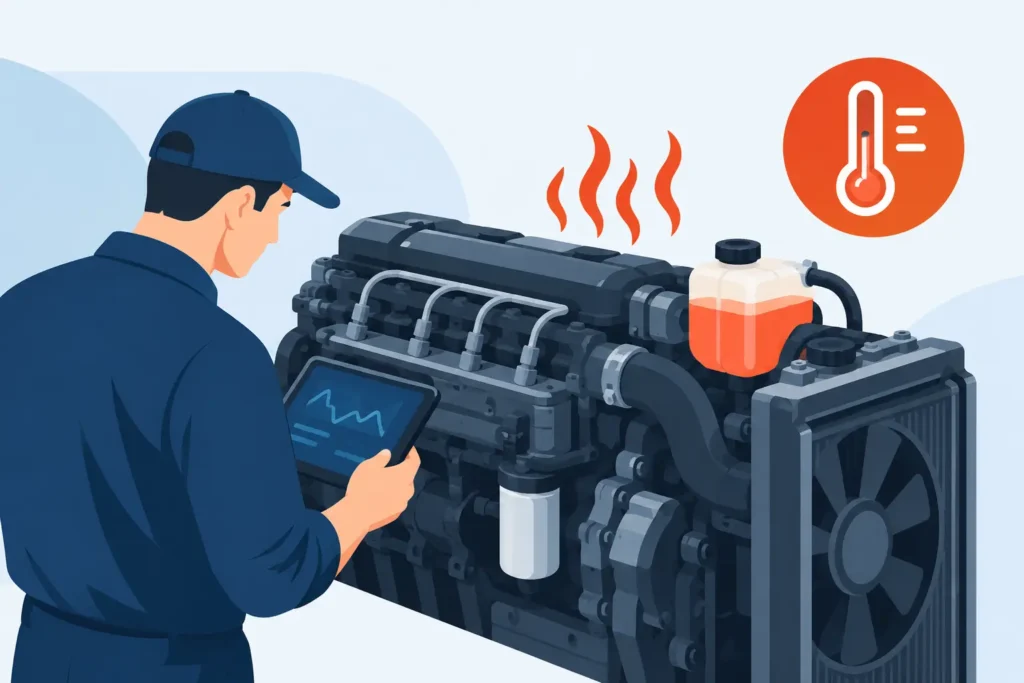
A diesel that runs hot can turn a productive day into an expensive shutdown quickly. Whether it is a highway tractor pulling a loaded trailer, an excavator trenching hard, or a skid steer working a summer landscaping job, the first step is to diagnose diesel engine overheating before a warning light becomes a cracked head, damaged gasket, or seized engine.
Do not assume the problem is simply low coolant. Diesel cooling systems depend on coolant condition, airflow, circulation, engine oil, fan operation, and the load placed on the machine. A good diagnosis follows the evidence, starting with safety and the operating conditions when the temperature rose.
Start With Safety and Confirm the Overheat
Never remove a radiator cap or coolant reservoir cap from a hot engine. A pressurized cooling system can release scalding coolant without warning. Shut the machine down if the gauge is climbing into the red, let it cool completely, and follow the manufacturer’s shutdown procedure before inspecting anything.
First, confirm that the engine is truly overheating. A faulty temperature sender, damaged wiring connection, or inaccurate dash gauge can create a false reading. If available, compare the dash temperature to data from the engine control module and check the thermostat housing, radiator inlet, and radiator outlet with an infrared thermometer. A temperature difference across the radiator is normal, but the readings should make sense for the machine’s operating temperature and load.
Pay attention to when the problem occurs. An engine that overheats only under a heavy pull may have restricted airflow, a weak fan clutch, a plugged radiator, or a cooling system that cannot keep up with the load. An engine that heats up soon after startup may point more toward low coolant, poor circulation, a stuck thermostat, combustion gases entering the cooling system, or an inaccurate sensor.
Check Coolant Level, Condition, and Leaks
Once the system is cool, inspect the coolant level in the reservoir and radiator where applicable. Low coolant is a symptom, not a diagnosis. The question is where it went.
Look for wet hose connections, staining around the radiator, coolant on the water pump weep hole, loose clamps, a damaged surge tank, or a leaking heater hose. On trucks, inspect lines that run to the heater circuit, EGR cooler, and auxiliary components. On heavy equipment, check for rubbed hoses, cracked fittings, and leaks around the radiator package where vibration and debris can cause trouble.
Coolant should be clean and compatible with the engine’s specified formulation. Rust-colored coolant, oily residue, sludge, or floating debris can reduce heat transfer and point to contamination. Mixing incompatible coolants can also create deposits that restrict passages over time. If the coolant level repeatedly drops without an obvious external leak, the engine may be consuming coolant internally through a head gasket, EGR cooler, cylinder liner issue, or other internal fault.
A pressure test is often the fastest way to find a small leak that does not show up during a quick walk-around. Testing the cap matters too. A weak cap can fail to hold pressure, lowering the coolant’s boiling point and allowing the system to push coolant out under load.
Watch for Signs of Combustion Gas
Continuous bubbles in the coolant reservoir, an unusually hard upper radiator hose soon after a cold start, coolant pushed out of the overflow, or unexplained coolant loss can indicate combustion pressure entering the cooling system. These signs do not automatically confirm a head gasket failure, but they require proper testing before the machine returns to hard work.
Ignoring this condition can lead to repeat overheating, warped cylinder heads, damaged liners, and major engine repairs. A combustion gas test, cooling-system pressure test, and engine data review can separate an internal engine problem from a simpler cooling-system fault.
Inspect Airflow Before Replacing Parts
Restricted airflow is one of the most common causes of overheating in construction and hauling equipment. A radiator can look acceptable from the outside while the fins are packed with dust, chaff, mud, insects, hydraulic oil residue, or material pulled in from the job site.
Inspect the full cooling stack, not just the front of the radiator. Many machines have an oil cooler, charge-air cooler, air conditioning condenser, and radiator arranged in layers. Debris lodged between those layers blocks airflow where it matters most. A machine working in demolition, land clearing, milling, or dry screening conditions may need cooling-pack cleaning far more often than the standard maintenance schedule suggests.
Clean carefully in the correct direction for the equipment. Blasting high-pressure water or air directly into fins can fold them over and make the restriction worse. If the cooling package cannot be properly accessed, it may need removal or professional cleaning.
Also inspect the cooling fan and shroud. A missing shroud, damaged fan blade, loose belt, slipping fan clutch, failed electric fan, or hydraulic fan control issue can reduce airflow dramatically. On electronically controlled equipment, scan data may show whether the control module is commanding fan speed as engine temperature rises. On a mechanically driven fan, check belt condition and tension along with clutch engagement.
Verify Coolant Circulation and Temperature Control
A full radiator does not prove coolant is moving properly. The thermostat controls when coolant flows through the radiator, while the water pump keeps circulation moving through the engine and cooling system.
A thermostat stuck closed can cause a fast overheat. A thermostat stuck open may cause slow warm-up and poor cab heat, although it can also contribute to temperature-control problems in certain operating conditions. Thermostats should be tested or replaced based on evidence, not guesswork. Removing one as a permanent fix is not a repair. It can disrupt designed coolant flow, affect emissions systems, and hide the actual problem.
Check the water pump for leakage, bearing play, belt-drive problems, and damaged impeller concerns where applicable. Some pumps can lose pumping efficiency without making obvious noise. Restricted coolant passages, collapsed lower radiator hoses, and plugged radiator cores can also limit circulation. If one area of the radiator remains significantly cooler than the rest after the thermostat opens, internal restriction may be present.
On older trucks and equipment, scale and sediment can build up inside the radiator and engine passages. Flushing may help in limited cases, but a badly restricted radiator often requires replacement or professional service. The right decision depends on the condition of the core and whether contamination has affected the rest of the system.
Do Not Overlook Oil, Load, and Fuel-Related Problems
Engine oil carries heat away from internal components. Low oil level, incorrect oil viscosity, overdue oil service, or a restricted oil cooler can add to an overheating complaint. Check the oil level after the equipment has been parked on level ground according to the manufacturer’s procedure. Look for coolant contamination or an oil level that rises unexpectedly, which can signal a more serious internal issue.
Then consider how the machine is being used. A loaded dump truck climbing grades, a dozer pushing continuously, or an excavator running high hydraulic demand in hot weather will generate more heat than light-duty operation. A cooling system that is only marginally restricted may appear fine at idle but fail during a long heavy pull.
Fuel and air restrictions, incorrect injection timing on applicable engines, turbocharger concerns, exhaust restrictions, and emissions-system faults can also raise exhaust temperatures and engine heat. These are not the first items to replace, but they belong in the diagnostic path when the basic cooling system checks do not explain the problem.
Use Data to Avoid Costly Guesswork
Modern diesel diagnostics should combine a physical inspection with operating data. Read fault codes, review live coolant temperature, intake-air temperature, fan command, engine load, boost pressure, and related sensor readings. A code alone is not a diagnosis, but it can direct testing and prevent unnecessary parts replacement.
A controlled road test or loaded equipment test may be needed because many overheating issues only appear under real operating demand. The technician should monitor temperatures while checking for coolant loss, fan response, abnormal pressure, and derates. This is especially valuable for fleet trucks that run normally in the yard but heat up on grades or during summer hauling.
For Ottawa-area contractors and fleet operators, fast diagnosis matters because a disabled machine can hold up labor, deliveries, and scheduled work. Tilling’s Repair Centre Vars can inspect diesel cooling, airflow, hydraulic fan, engine-data, and related repair issues in the shop or through responsive service support when equipment downtime cannot wait.
When to Stop Running the Engine
Do not keep working a diesel that repeatedly overheats just to finish the last load or pass. Stop operation if the temperature enters the danger zone, coolant boils over, power drops from an engine derate, steam appears, the low-coolant warning comes on, or the engine begins losing coolant quickly.
A short pause to diagnose the cause is usually less costly than turning a repairable cooling problem into an engine replacement. Keep cooling packs clean, inspect coolant levels as part of daily checks, and treat any change in normal operating temperature as a reason to act before the schedule gets harder to recover.