
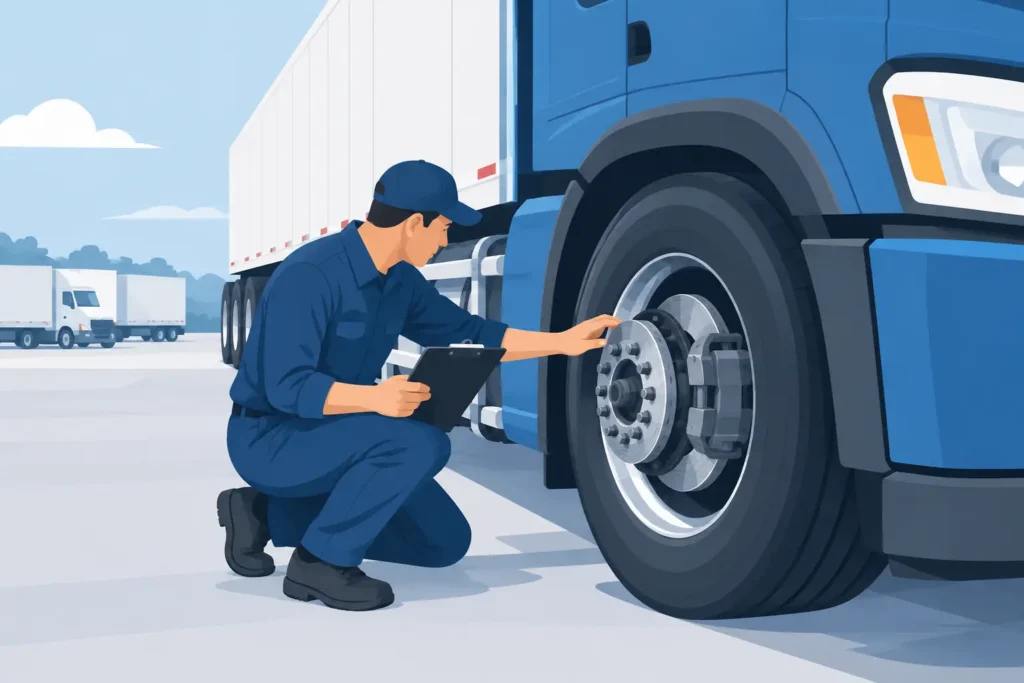
A truck can leave the yard with a full load, a tight schedule, and a brake issue that has not made itself obvious yet. That is why knowing when inspect commercial truck brakes cannot be limited to the annual inspection date. For fleet operators, owner-operators, and contractors moving equipment or material, brake inspections need to be part of the daily operating routine and the planned maintenance schedule.
Brake problems rarely arrive at a convenient time. A sticking caliper, worn lining, air leak, contaminated rotor, or out-of-adjustment brake can turn into a roadside delay, a failed inspection, damaged equipment, or a serious safety event. Consistent inspections catch small issues before they take a truck out of service.
When to Inspect Commercial Truck Brakes
Commercial truck brakes should be checked at several points, not just when a warning light comes on. The right interval depends on the truck’s duty cycle, load weight, terrain, mileage, weather exposure, and how long it sits between runs.
At a minimum, drivers should perform a brake-related check before each shift or trip. This is the first opportunity to spot air leaks, warning lights, low pressure, brake response issues, or visible damage. The driver does not need to disassemble anything, but they do need to take the inspection seriously. A rushed walk-around can miss a problem that becomes costly a few miles down the road.
Brakes also deserve attention during routine preventive maintenance. Fleets that run local delivery, construction hauling, aggregate, demolition, or heavy equipment transport often need more frequent service than trucks running steady highway miles. Stop-and-go traffic, heavy loads, gravel roads, mud, salt, and steep grades all put more demand on braking components.
A qualified technician should inspect the complete brake system during scheduled service intervals and whenever a driver reports a change in braking performance. Waiting for metal-on-metal noise or a dashboard warning is waiting too long.
Start Every Shift With a Practical Brake Check
A pre-trip inspection gives the driver a chance to identify obvious concerns before the truck is loaded or leaves the site. Check for visible air leaks, damaged hoses, loose fittings, worn tires that could affect braking traction, and fluid leaks around wheel ends. Listen while the air system builds pressure. An air compressor that takes too long to build pressure or cycles more than usual needs attention.
Inside the cab, confirm that the low-air warning works and that the pressure gauges respond normally. With the engine off and the brakes released, watch for excessive pressure loss. Apply and hold the service brake to check for further loss. Parking brakes should hold the truck securely when tested in a safe area.
The service brake test matters as well. At low speed, the truck should stop straight without pulling, grabbing, shuddering, or requiring unusual pedal effort. A pull to one side may point to an adjustment issue, contamination, a seized component, uneven lining wear, or a tire and suspension problem. The exact cause requires proper diagnosis, but the truck should not be pushed through the day simply because it can still stop.
Inspect More Often in Hard-Use Conditions
Not every commercial truck works the same kind of day. A highway tractor pulling light, predictable loads may follow a different maintenance pattern than a dump truck moving aggregate through a wet job site. The calendar alone does not tell the whole story.
Increase inspection frequency when trucks operate in the following conditions:
- Heavy or variable loads that create higher brake temperatures and faster wear
- Frequent stops, city routes, or construction-site travel with repeated low-speed braking
- Long grades, especially when engine braking is not used correctly or is unavailable
- Winter road salt, water, mud, and debris that accelerate corrosion and component wear
- Long periods of parking that can lead to seized calipers, sticking valves, or rusted brake surfaces
This does not mean every truck needs a full teardown every week. It means your maintenance plan should match the work. A truck that makes dozens of loaded stops each day needs closer attention than one that runs mostly open highway. Maintenance intervals should be based on inspections and operating history, not guesswork.
Warning Signs That Call for an Immediate Inspection
Drivers are often the first to notice a change, and their reports should lead to prompt action. Brake concerns should be documented and checked before the next loaded run whenever possible. The cost of a short inspection is small compared with the cost of a collision, tow, missed delivery, or out-of-service order.
Common warning signs include a brake warning light, low air pressure, frequent air compressor cycling, hissing air leaks, delayed brake application, or a parking brake that does not hold reliably. Burning smells after normal driving, excessive heat at a wheel end, smoke, and repeated brake fade all call for immediate attention.
Pay attention to how the truck tracks under braking. Pulling, vibration through the steering wheel, a pulsating pedal, unusual noise, or a trailer that feels unstable can signal a brake issue or a related wheel-end, tire, suspension, or coupling problem. Do not assume the condition will clear up on its own after the next load.
Uneven brake wear is another reason to inspect the full system. Replacing one worn component without finding why it wore differently can lead to the same failure again. A technician may need to check caliper movement, slack adjusters, chambers, air lines, valve operation, drums or rotors, hubs, bearings, and brake balance across the axle.
What a Scheduled Brake Inspection Should Cover
A proper shop inspection goes beyond looking through the wheel. Technicians should check lining or pad thickness, wear patterns, cracks, glazing, hardware condition, and drum or rotor condition. They should inspect air chambers, pushrods, hoses, fittings, valves, ABS components, and any signs of air loss or corrosion.
Adjustment and stroke measurements are especially important on air-brake systems. Too much pushrod travel can reduce braking effectiveness and may indicate wear, incorrect adjustment, or a mechanical fault. Automatic slack adjusters are not a reason to ignore adjustment checks. If they are repeatedly out of range, there is usually an underlying problem to correct.
Wheel-end work should include checking for grease or oil contamination. A leaking seal can damage friction material and reduce stopping power. Heat damage may also show up as discolored drums, cracked rotors, hardened linings, or damaged bearings. Catching these conditions early can prevent a more extensive axle repair.
The trailer needs the same level of attention as the truck. Trailer brakes can be overlooked because drivers feel the tractor’s response first, but a poorly braking trailer can increase stopping distance, cause instability, and put extra strain on tractor brakes. Inspect the supply and service lines, gladhands, electrical connection, ABS warnings, chambers, brakes, and wheel ends as part of the same maintenance process.
Use Driver Reports and Maintenance Records Together
A dependable brake program is built on information from the road and the shop. Drivers should report changes as soon as they notice them, even if the truck still appears operable. Maintenance records should show what was found, what was replaced, measurements taken, and whether recurring issues are affecting a particular unit or axle.
Those records help a fleet make better decisions. If one truck is going through pads or linings faster than expected, the answer may be route conditions, overloading, driver habits, improper brake balance, or a mechanical issue. If several units develop corrosion-related problems after winter, it may be time to revise wash procedures or spring inspection timing.
This approach also helps with scheduling. Rather than pulling a truck from a busy week for a preventable repair, you can plan service around known wear and keep parts on hand for the equipment your fleet uses most.
Do Not Treat Brake Service as a Downtime Problem
Taking a truck out of service for a brake inspection can feel inconvenient when crews, materials, and deliveries are waiting. But operating with a suspected brake defect creates far more disruption when the issue becomes a roadside breakdown or inspection failure. The right move is to assess the problem quickly, repair it correctly, and return the unit to work with confidence.
For Ottawa-area operators, Tilling’s Repair Centre Vars provides commercial truck and trailer diagnostics and repairs focused on reducing unplanned downtime. Whether the concern is an air leak, worn braking components, uneven wear, or a truck that does not feel right under load, a timely inspection gives your operation a clearer path forward.
The best time to inspect brakes is before a driver has to question whether the truck will stop as expected. Build checks into every shift, adjust service intervals for the work your trucks actually do, and act on small changes early. That keeps drivers safer, loads moving, and the next job from being delayed by a repair that could have been planned.