A blown hydraulic hose can stop a loaded dump truck, strand an excavator mid-trench, or take a skid steer out of a landscaping job before the first load is moved. Custom hydraulic hose fabrication is not just a replacement service in that moment. It is a practical way to get the right line back on the machine, reduce lost work time, and avoid creating a second failure with a poorly matched hose.
For contractors, trucking companies, and fleet operators, the cost is rarely limited to the hose itself. A failed line can mean idle operators, delayed deliveries, a missed concrete pour, rental equipment sitting unused, or a jobsite that cannot move material safely. Fast, accurate hose service matters because the machine still has work to do.
Why Hydraulic Hoses Fail on Working Equipment
Hydraulic hoses work under high pressure, heat, vibration, movement, and exposure to dirt, salt, and debris. On excavators, loaders, dozers, trucks, and compact equipment, they are often routed through tight areas where a small amount of rubbing can become a major problem over time.
Some failures are obvious. A hose may burst, leak at a fitting, or have a damaged outer cover. Others build slowly. A soft spot, cracked cover, blister, rusted fitting, or wet connection can point to a hose that is close to failing. Catching those signs during a service check is far less disruptive than dealing with a breakdown in the middle of a scheduled job.
Age is only one factor. A relatively new hose can fail early if it has been twisted during installation, routed too close to a hot component, pinched at full boom movement, or fitted with the wrong pressure rating. That is why replacing a line by appearance alone is not enough. The replacement must suit the machine and the work it performs.
What Custom Hydraulic Hose Fabrication Means
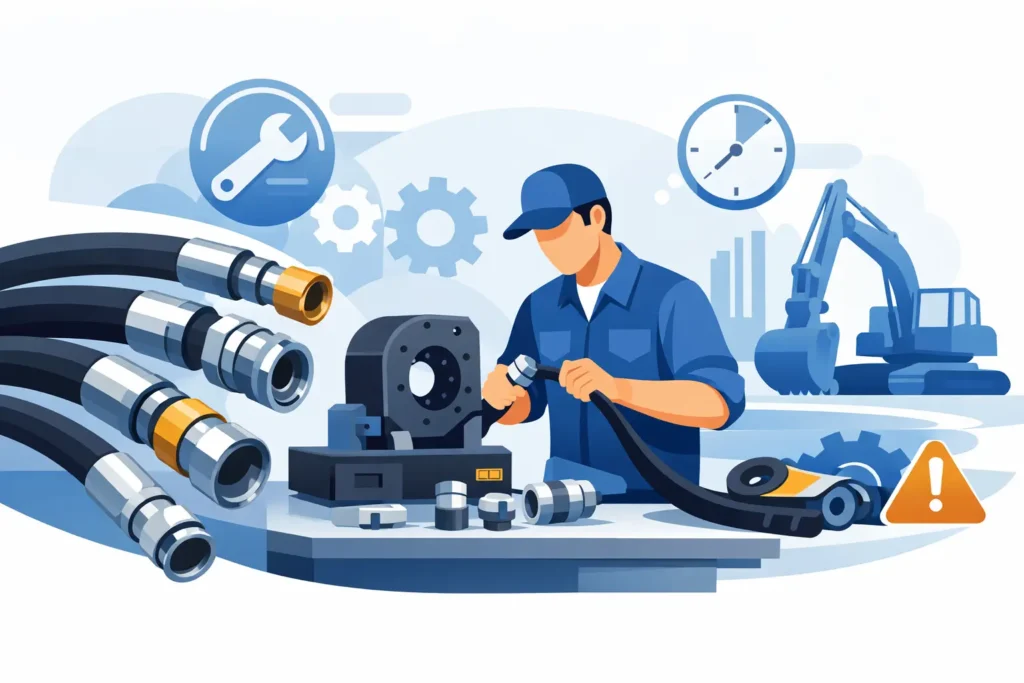
Custom hydraulic hose fabrication means building a replacement hose to match the application rather than trying to force a generic part into place. The technician identifies the correct hose size, pressure requirement, fitting style, fitting angle, length, and routing needs. The hose is then cut, fitted, crimped, and checked before installation.
For a straightforward machine, this may be a direct replacement for a failed line. For older equipment, modified attachments, or hard-to-source applications, custom fabrication can be the difference between getting back to work and waiting days for a factory hose assembly.
A proper hose assembly takes more than matching the inside diameter. Hose type and fittings must be compatible with each other and rated for the hydraulic system. Length must allow for machine movement without stretching, kinking, or dragging. Fitting orientation also matters. A hose with the right ends but the wrong angle can twist under pressure or rub against a frame, cylinder, or guard.
The Details That Affect Hose Life
A hose that fits physically may still be wrong for the job. Working pressure, impulse rating, temperature exposure, fluid type, bend radius, and abrasion risk all affect the correct selection. A loader used daily in aggregate or snow work faces different conditions than an excavator running a breaker attachment or a transport truck operating through winter road salt.
Protection can also be part of the repair. Depending on the location, the hose may need abrasion sleeve, better clamping, a protective guard, or rerouting away from sharp edges. These small corrections can prevent the same line from failing again after only a few weeks of work.
When a Repair Is Safe and When Replacement Is Better
Not every hydraulic issue calls for a fully new hose assembly, but many do. If the leak is at a fitting and the hose body remains in good condition, a technician can assess whether a repair is appropriate. If the hose cover is worn through, the reinforcement is damaged, the line has swollen, or there is a visible crack, replacement is generally the safer choice.
Trying to patch a high-pressure hydraulic hose in the field is a poor trade-off. It may appear to save time, but an unreliable repair can fail under load, contaminate the jobsite, damage the machine, and put operators at risk. Hydraulic fluid under pressure can penetrate skin and requires immediate medical attention. Leaks should never be checked by hand while the system is pressurized.
The right approach depends on the machine, the line location, and the failure. A hose on an auxiliary attachment circuit may be easier to access than a line buried in an excavator boom or routed near a truck’s moving components. Experienced diagnosis helps prevent a quick repair from becoming a repeat service call.
Reducing Downtime Starts Before the Hose Blows
Most operators know which machines are working harder than usual. A compact track loader clearing lots all season, a wheel loader handling salt, or an excavator running long days on site puts constant demand on hydraulic components. Planned inspection gives fleet managers a chance to replace suspect hoses during scheduled downtime instead of during an urgent breakdown.
Pay attention to hoses that show rubbing, oil seepage, exposed wire reinforcement, corrosion around fittings, flattened sections, or signs of heat damage. Check clamps and brackets as well. A missing clamp can let a hose move just enough to wear against steel, especially on equipment that travels over rough ground.
It also helps to keep accurate service records. When a recurring hose fails on the same machine, the cause may be routing, vibration, pressure spikes, or an operating issue rather than simple wear. Tracking repeat failures gives the repair team useful information and helps target a lasting fix.
For commercial fleets, it is worth identifying commonly used hose sizes and fittings across trucks, trailers, loaders, and attachments. Stocking a few appropriate spares can make sense for high-use equipment, but it does not replace professional fabrication. A spare still needs to be correctly specified, stored properly, and installed without twisting or contamination.
Custom Hydraulic Hose Fabrication for Different Equipment
Construction and hauling equipment use hydraulics in different ways, but the operating goal stays the same: dependable movement without leaks, lost power, or unsafe conditions. An excavator hose may control boom, stick, bucket, travel, or attachment functions. A skid steer may need an auxiliary hose for a grapple, auger, or breaker. A dump truck may rely on hydraulic lines for hoist operation, while trailers and heavy trucks can have hydraulic systems supporting specialized equipment.
That variety is why generic one-size-fits-all replacements create problems. Hose assemblies must account for the equipment manufacturer, the specific circuit, available routing space, and the pressure demands of the application. A line that works on one attachment may not be suitable for another, even if the fittings look similar.
At Tilling’s Repair Centre Vars, technicians support hydraulic repairs and hose fabrication as part of broader heavy equipment and truck service. That matters when the hose failure is only one symptom. If a new line fails quickly, the machine may need further inspection for damaged fittings, restricted flow, incorrect routing, cylinder issues, or a pressure problem.
What to Have Ready When You Need a Hose Built
When calling for service, the fastest path to a correct replacement is providing the machine make, model, and the location of the failed hose. Clear photos of both hose ends, the fitting angles, and the routing area can also help. If the old hose is available, bringing it in provides a useful reference, even when damage makes every marking unreadable.
Do not assume the hose length alone identifies the assembly. Measure end to end if needed, but include fitting details and note whether the hose moves with a boom, steering system, lift cylinder, or attachment. Let the technician know if the machine has been modified or if the line has failed before. Those details can reveal a routing or application issue that needs correction.
A machine does not need to stay down longer than necessary because of a damaged hydraulic line. Get the failure assessed, use a properly matched hose assembly, and address the reason it failed where possible. That is how a repair supports the next shift, the next delivery, and the next deadline instead of merely getting through the current one.