A crew waiting on a machine is still on the clock. Whether you are clearing a lot in Kanata, moving aggregate in Rockland, or preparing a commercial site in Ottawa, construction equipment rental can keep a job moving when your own fleet is tied up, under repair, or not sized for the work ahead.
The right rental does more than fill a gap. It gives you access to job-ready equipment without the cost, storage demands, maintenance burden, and long-term commitment of buying another machine. For contractors, landscapers, haulers, and property developers, that flexibility can protect the schedule and the margin at the same time.
When Construction Equipment Rental Makes Sense
Owning equipment is often the right call when a machine runs steadily across enough projects to justify financing, insurance, transport, maintenance, and depreciation. But not every job has the same demands. A site may need a larger excavator for two weeks, a compactor for a short road repair, or a screener only while processing a stockpile of material.
Rental is a practical choice when workload spikes, a machine is down unexpectedly, or a job requires equipment you do not normally carry. It also helps when you want to take on a project without buying a specialized machine that may sit idle once the work is complete.
For many operators, the decision comes down to utilization. If a machine will work regularly and profitably throughout the year, ownership may make sense. If it is needed for a specific phase, a seasonal push, or backup capacity, rental can be the cleaner business decision.
There is also the maintenance question. Every owned machine needs service, inspections, repairs, and parts support. A rental unit should arrive ready to work, allowing your team to focus on production rather than troubleshooting an unfamiliar issue in the middle of a shift.
Match the Machine to the Work, Not the Guess
The lowest rental rate is not always the lowest job cost. Renting a machine that is too small can stretch a one-day task into three days. Renting equipment that is oversized for the site can create access problems, higher fuel use, and unnecessary transport expense. The goal is to select equipment that fits the material, ground conditions, space restrictions, and production target.
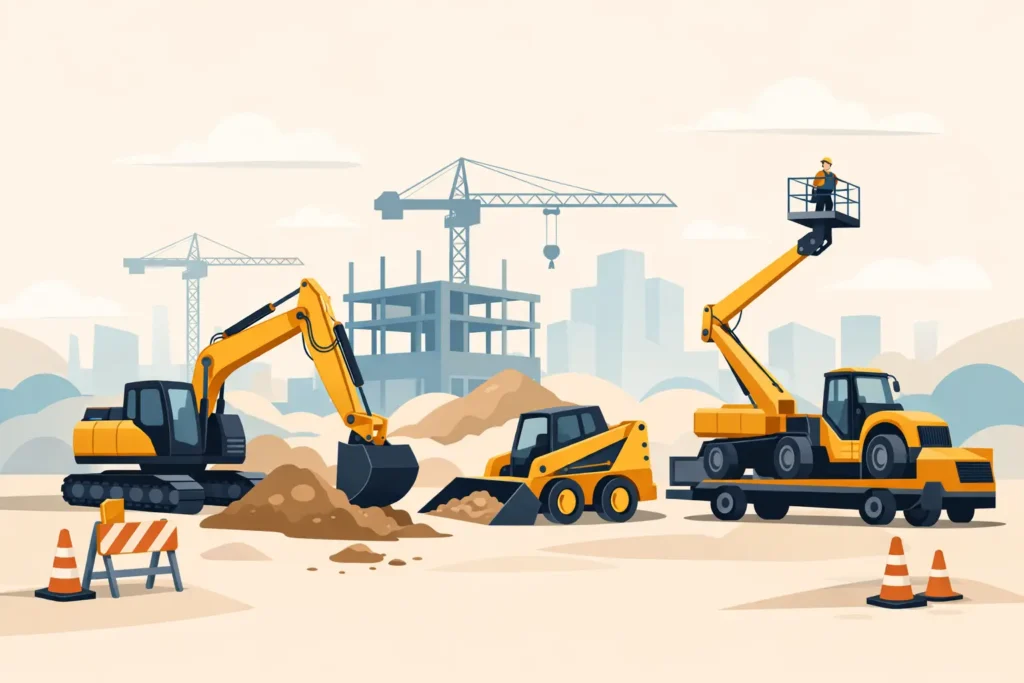
A tracked excavator is a strong fit for trenching, digging, demolition, drainage work, and loading trucks on softer or uneven ground. A wheel loader is often the better choice for stockpiling, feeding material, loading aggregate, and moving bulk material efficiently across a yard or active site.
Bulldozers earn their place on grading, land clearing, rough shaping, and pushing work where traction and control matter. Tracked skid steers bring useful versatility to tighter sites, landscaping projects, site cleanup, and material handling, especially when the work calls for frequent attachment changes.
Dump trucks support the entire production cycle by moving excavated soil, aggregate, demolition debris, and fill where it needs to go. Compaction equipment is essential when a project requires stable base material, trench backfill, or properly prepared ground before paving or building proceeds. Material screeners can turn mixed soil or aggregate into usable product, reducing disposal costs and helping crews make better use of material already on site.
Before scheduling a rental, be clear about the job scope. A useful conversation includes the type and volume of material, expected operating hours, site access, required reach or lifting capacity, ground conditions, transport needs, and whether an operator is being supplied. Those details help avoid a machine change after the crew has already mobilized.
Ask about the whole job, not just the machine
Equipment availability is only one part of the plan. Confirm delivery timing, pickup arrangements, rental duration, fuel expectations, daily operating limits, and what support is available if an issue develops. A machine that arrives late or cannot be replaced quickly can cost more than the difference between two quoted rates.
It is also worth considering the work around the machine. An excavator without enough trucks to haul material can sit idle. A screener without room for feed piles and finished product can slow the site down. Good equipment planning considers the complete workflow, from loading and hauling to final grading and cleanup.
Flexible Terms Help Control Project Costs
Daily rentals work well for quick repairs, one-off loading work, short cleanup efforts, and emergency coverage. Weekly rentals can make more sense for active project phases where the production schedule is clear but temporary. Long-term rental is often a strong option for extended developments, seasonal work, or ongoing fleet support.
The best term depends on how certain the schedule is. A short rental offers flexibility when weather, permits, subcontractors, or material deliveries may change the plan. A longer agreement may provide better value when the machine will be used consistently and the project timeline is stable.
Do not let an optimistic schedule create a rushed decision. Build in realistic time for rain days, utility conflicts, truck delays, inspections, and changes in site conditions. If equipment will be needed longer than expected, knowing the extension process in advance can prevent last-minute scrambling.
Rental Equipment Is Also a Downtime Strategy
A breakdown does not always mean the job has to stop. When an owned excavator has a hydraulic problem, a loader needs major repair, or a dump truck is off the road, a rental unit can keep the crew productive while repairs are underway.
This is where working with an equipment provider that understands repairs matters. The issue may be a failed hose, electrical fault, engine concern, transmission problem, or wear item that needs attention before it becomes a larger failure. A provider with both rental equipment and repair capability can help you make a faster decision: repair immediately, arrange temporary equipment, or do both so work continues.
Tilling’s Repair Centre Vars supports Ottawa-area operators with heavy equipment rentals and repair services because job sites do not separate equipment needs from maintenance needs. When one machine is down, the priority is not a complicated process. It is getting productive equipment on site and getting the failed unit assessed quickly.
For fleet operators, rental can also protect against overcommitting owned assets. Instead of sending every available machine to one project and leaving no backup, a rented unit can cover peak demand while your core fleet remains available for scheduled work, planned maintenance, and customer commitments.
Keep Rental Equipment Safe and Productive
Even a well-maintained rental machine needs a proper site check before work begins. The operator should inspect the machine at the start of each shift, review controls and safety features, check for visible leaks or damage, and make sure the work area is clear of hazards.
Use qualified operators who understand the machine class and the site plan. Confirm overhead clearances, underground utility requirements, ground stability, traffic movement, spotter procedures, and loading limits. Equipment is only productive when it can operate safely and consistently.
If something does not sound, feel, or operate correctly, stop and report it early. Continuing to run a machine with a hydraulic leak, warning light, unusual vibration, or control issue can create a larger repair and put people at risk. Fast communication gives the rental provider the best chance to diagnose the problem, dispatch support, or arrange another unit with minimal disruption.
Plan Early, Then Keep the Line Open
The best time to arrange construction equipment rental is before the site reaches the point of urgency. Early planning gives you more equipment options, clearer delivery windows, and time to select the machine that truly fits the work. It also gives your team a chance to coordinate operators, trucks, attachments, fuel, and site access before the machine arrives.
Still, construction rarely follows a perfect plan. When a job expands, an owned machine goes down, or a deadline moves forward, responsive local support becomes part of the equipment itself. Give your rental partner the real job details, keep them updated on schedule changes, and address mechanical concerns early. That approach helps keep the machine working, the crew moving, and the project on track.