Heavy equipment is one of the most valuable investments for construction companies, contractors, landscapers, and property developers. Whether you operate excavators, loaders, skid steers, dozers, or transport trucks, proper maintenance is essential for maximizing performance, reducing downtime, and extending equipment lifespan.
Unfortunately, many costly repairs and equipment failures occur because routine maintenance is overlooked. A proactive maintenance strategy can help protect your investment while improving productivity on every job site.
In this guide, we’ll cover practical preventive maintenance tips that can help keep your heavy equipment operating efficiently for years to come.
Why Preventive Maintenance Matters
Preventive maintenance involves regularly inspecting, servicing, and maintaining equipment before problems occur. Unlike reactive repairs, preventive maintenance focuses on identifying potential issues early and correcting them before they lead to major failures.
Benefits include:
- Reduced equipment downtime
- Lower repair costs
- Improved fuel efficiency
- Increased safety
- Longer equipment lifespan
- Better job site productivity
A well-maintained machine is more reliable, more efficient, and less likely to experience unexpected breakdowns.
Perform Daily Equipment Inspections
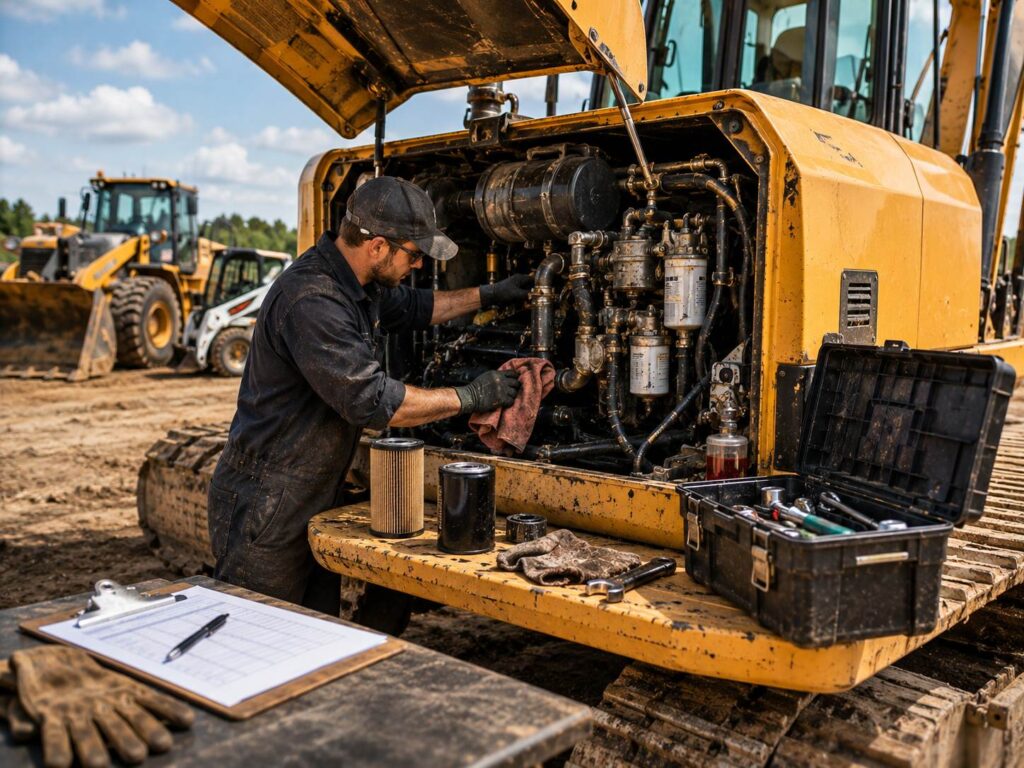
One of the simplest yet most effective maintenance practices is conducting daily inspections before equipment is operated.
Check for:
- Fluid leaks
- Loose bolts and fittings
- Damaged hoses
- Cracked components
- Tire or track wear
- Warning lights and indicators
These quick inspections can help identify small problems before they become expensive repairs.
Monitor Fluid Levels Regularly
Heavy equipment relies on several critical fluids to operate properly.
Monitor and maintain:
- Engine oil
- Hydraulic fluid
- Coolant
- Transmission fluid
- Brake fluid
Low or contaminated fluids can cause excessive wear, overheating, and component failure. Always use manufacturer-recommended fluids and replace them according to service intervals.
Keep Hydraulic Systems in Good Condition
Hydraulic systems power many essential machine functions. Poor hydraulic maintenance can lead to reduced performance and costly repairs.
Inspect regularly for:
- Hydraulic leaks
- Damaged hoses
- Loose fittings
- Contaminated fluid
- Reduced system pressure
Replacing worn hoses and addressing leaks promptly helps maintain system efficiency and reliability.
Replace Filters on Schedule
Filters protect critical components from dirt, debris, and contaminants.
Important filters include:
- Engine oil filters
- Fuel filters
- Air filters
- Hydraulic filters
Dirty filters restrict performance and place additional stress on equipment systems. Following recommended replacement intervals can significantly improve machine longevity.
Maintain Proper Lubrication
Lubrication is essential for reducing friction and wear on moving components.
Regularly grease:
- Pins and bushings
- Bearings
- Pivot points
- Linkages
- Undercarriage components
Proper lubrication helps extend component life while reducing costly wear and tear.
Pay Attention to Tracks, Tires, and Undercarriages
Undercarriage components often represent a significant portion of equipment maintenance costs.
Inspect regularly for:
- Uneven wear
- Damaged tracks
- Loose track tension
- Tire damage
- Roller wear
Addressing undercarriage issues early helps prevent more expensive repairs later.
Train Operators Properly
Equipment maintenance begins with proper operation.
Experienced operators can help reduce wear by:
- Avoiding excessive idling
- Operating within equipment limits
- Following recommended procedures
- Reporting issues immediately
Proper operator training contributes significantly to equipment longevity and reliability.
Schedule Professional Inspections
While daily inspections are important, professional inspections provide a more detailed assessment of equipment condition.
Experienced technicians can identify:
- Hidden wear
- Hydraulic problems
- Electrical issues
- Engine performance concerns
- Transmission problems
Regular professional inspections help prevent unexpected failures and support long-term equipment health.
Keep Maintenance Records
Maintaining accurate service records helps track maintenance schedules, repairs, and component replacements.
Benefits include:
- Better maintenance planning
- Improved resale value
- Reduced missed service intervals
- Easier troubleshooting
Detailed records make equipment management more efficient and cost-effective.
Conclusion
Preventive maintenance is one of the most effective ways to protect your heavy equipment investment. Regular inspections, proper lubrication, fluid monitoring, hydraulic maintenance, and professional servicing all contribute to longer equipment life and improved performance.
At Tillings, we provide professional heavy equipment repair and maintenance services to help contractors keep their equipment running at peak performance. Whether you need hydraulic repairs, engine diagnostics, preventative maintenance, or equipment inspections, our experienced team is ready to help.
Contact Tillings today to learn more about our maintenance and repair solutions.